Stopping weeds before they start: what heat does to weed seeds
Thermal weeding does more than kill the weeds you can see. Used well, it also kills many of the seeds lying on or just below the surface
Stopping weeds before they start: what heat does to weed seeds
Thermal weeding does more than kill the weeds you can see. Used well, it also kills many of the seeds lying on or just below the surface, so fewer weeds come up next time.
That preventive effect is often mentioned but rarely explained. This article sets out what heat actually does to a weed seed, what independent research has measured, and how to get the most from it. We have also been clear about what the research doesn't yet show.
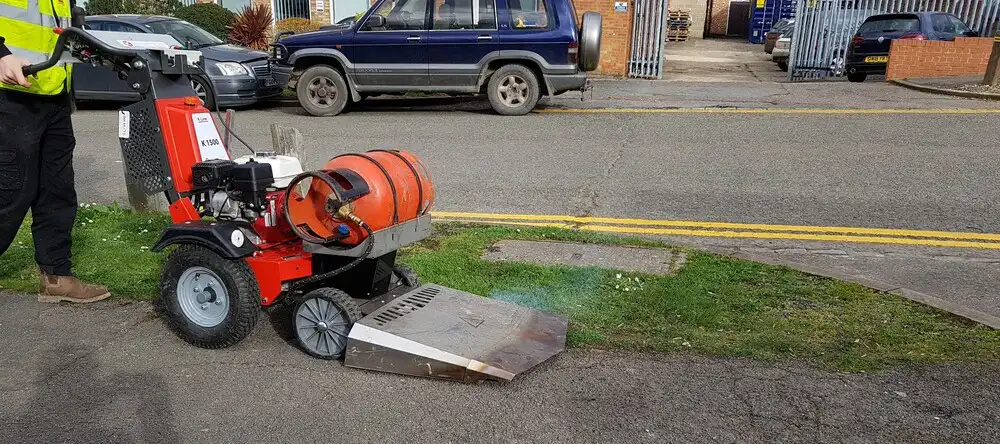
How heat kills a seed
A seed dies when heat damages the living embryo inside it. Three things decide whether that happens.
- Temperature. The proteins and cell membranes in a seed break down when they get hot enough. The hotter the treatment, the faster this happens.
- Time. A seed can survive a brief blast of heat that would kill it if held for longer. Lower temperatures need much longer exposure.
- Moisture. For most species, a seed that has soaked up water is metabolically active and far more vulnerable. A dry, dormant seed is protected by its tough coat and can withstand much more heat.
That combination explains why different thermal methods have such different effects on seeds, and why conditions on the day matter so much.
What the research shows
Studies across flame, infrared, hot water and steam all point the same way: enough heat kills weed seeds, and exposed seeds, often moist ones, die most easily.
| Study | Method | What it found |
|---|---|---|
| Hamberg & Bagavathiannan, Weed Technology, 2026 | Infrared heat on seeds of nine weed species | Moisture changed the dose needed dramatically: dry Palmer amaranth seed needed around twelve times the heat of soaked seed. The effect varied by species, though, and one grass was actually easier to kill dry. |
| Oliver et al., Invasive Plant Science and Management, 2020 | 80°C water on Himalayan balsam seed sown 5 mm deep | Seedling emergence fell by 78% after a 3.5-second treatment and 93% after 7 seconds. The longer dose kept soil above 50°C for almost two minutes, down to 10 mm. |
| Gallandt, University of Maine (SARE), 2011–12 | Flaming seeds lying on bare soil, at three speeds | A slow pass killed 75% or more of the seed of all three species tested. A fast pass killed about half of one species and barely affected the others. Seeds still on the plant survived. |
| Dahlquist et al., Weed Science, 2007 | Moist seeds of six weeds held at set temperatures | All species died at 50°C and above, but this took hours. At 70°C the most sensitive species died in about ten minutes. |
| Melander & Jørgensen, 2005 (reviewed here) | Steaming soil in vegetable rows | Heating the soil to 61°C cut weed emergence by about 90%. |
| Bitarafan et al., 2022 (reviewed here) | Steaming soil to different temperatures | Germination fell by about half at 62–68°C and by about 90% at 76–86°C. |
The pattern is consistent. Kill rates rise sharply with temperature and dose, and they are highest when seeds are exposed and, for many species, wet.
Hot air and hot water work differently
Hot air and infrared act on the surface; hot water carries heat into the top centimetre of soil and holds it there.
Hot air and infrared machines, such as the Hoaf Weedair, heat the surface intensely for a second or two as they pass. That is enough to kill seeds lying exposed on the surface, especially if they are damp. Seeds tucked under debris or soil are largely shielded.
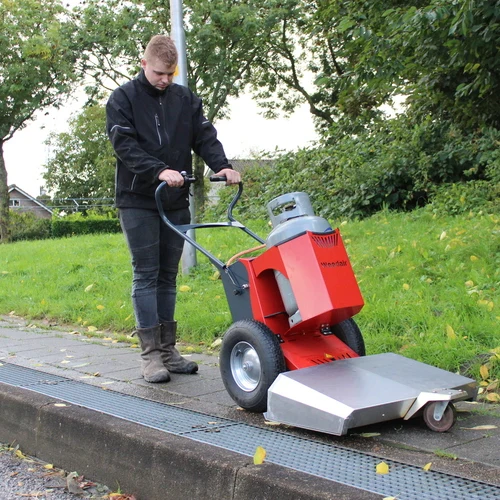
Hot water behaves differently. Water holds far more heat than air and soaks into the ground, so it keeps the top layer hot for much longer. In the Norwegian balsam study, the soil stayed above 50°C for almost two minutes at 10 mm deep. Water also wets the seeds as it heats them, which for many species makes them much easier to kill.
The trade-off is depth and dose. In the same study, halving the water meant the soil at 10 mm never reached 50°C. Hot water reaches deeper than hot air, but only with a generous application, and only so far.

Getting the most preventive benefit
The research points to five practical steps that make each thermal treatment do more to stop future weeds.
- Treat before weeds set seed. Seeds still on the plant are protected by the surrounding plant tissue, and the Maine study found flaming seed heads did not kill the seeds inside. The biggest preventive win is killing young plants before they flower, so no new seed is added.
- Clear the debris first. Seeds buried in silt and leaf litter along kerbs and joints are shielded from heat. Brushing out that layer removes much of the seedbank with it and leaves the remaining seed exposed to treatment.
- Take advantage of damp conditions. For many species, moist seeds are far easier to kill. Treating seed that has already absorbed water, rather than dry dormant seed, gets more from the same amount of heat.
- Don't rush the pass. Dose matters. In the flaming study, halving the speed turned a patchy result into a kill of 75% or more. Working at the machine's recommended speed, or applying enough hot water, makes the difference.
- Keep treatments regular. Each treatment removes more of the seed near the surface. Over successive seasons, fewer seeds remain to germinate, and the need for treatment falls.

What we don't know yet
The principle is well established, but nobody has yet measured the effect on the seedbank of a UK pavement.
- Most studies are from farms and labs. They show what heat does to seeds, but not the exact kill rate in kerb-edge debris on a working street.
- Species vary widely. Some weed seeds are far tougher than others, so no single figure applies to every site.
- Field results are noisier. In the Maine study, seeds placed on soil died in large numbers, but the difference in the wider field seedbank was too variable to prove statistically.
One figure often quoted is that around 65% of surface seed is damaged so it no longer germinates. That comes from Hoaf, the manufacturer of the Weedair range, in its user guidance. It is a reasonable estimate in light of the research above, but it is the manufacturer's figure rather than an independently tested one, and real results will depend on conditions and species.
The bottom line
Thermal weeding is preventive as well as reactive. Every well-timed treatment kills the weeds in front of it and a share of the seed that would have grown into next year's weeds.
It works best as part of an integrated programme: brush out the debris that hides and feeds the seedbank, then use hot air or hot water to treat young growth and exposed seed before it can establish. Done that way, each season starts with fewer seeds than the last.
To talk through which thermal method suits your sites, or to arrange a demonstration, contact Kersten UK.
Sources
- Hamberg & Bagavathiannan (2026). Energy thresholds for mid-infrared thermal control of weed seeds and plants. Weed Technology.
- Oliver, B. W., Berge, T. W., Solhaug, K. A. & Fløistad, I. S. (2020). Hot water and cutting for control of Impatiens glandulifera. Invasive Plant Science and Management, 13(2), 84–93.
- Gallandt, E. (2011–13). Fall flame weeding: targeting weed seeds before they enter the seedbank. Northeast SARE project ONE11-141, University of Maine.
- Dahlquist, R. M., Prather, T. S. & Stapleton, J. J. (2007). Time and temperature requirements for weed seed thermal death. Weed Science, 55(6), 619–625.
- de Oliveira et al. (2023). An integrated weed management approach in tomato using soil steaming, mulching, and winter cover crops. Frontiers in Agronomy. Source for the Melander & Jørgensen (2005) and Bitarafan et al. (2022) steaming findings.
- Hoaf Infrared Technology, ThermHit 45/75 user guide (Dutch). Source of the 65% seed damage estimate.

No comments yet. Login to start a new discussion Start a new discussion